The Jeep Wrangler. The name itself conjures images of rugged terrain, open-air adventures, and the raw, untamed spirit of off-roading. But beneath that iconic exterior lies a complex machine, and one of the key components influencing its performance, sound, and even its aesthetic appeal is its exhaust system. Understanding Jeep Wrangler exhaust parts is crucial for any owner looking to personalize their ride, boost performance, or simply maintain its optimal function. This guide will delve deep into the world of Wrangler exhaust systems, providing you with the knowledge you need to make informed decisions about upgrades, repairs, and maintenance.
Introduction: The Importance of Your Wrangler's Exhaust System
Unleash Your Wrangler: A Comprehensive Guide to Jeep Wrangler Exhaust Parts
The exhaust system is more than just a pipe that expels fumes from your engine. It's a carefully engineered network of components designed to manage exhaust gases, reduce emissions, and even influence the engine's horsepower and torque output. On a Jeep Wrangler, the exhaust system plays a particularly important role due to the vehicle's often demanding operating conditions. From navigating rocky trails to powering through deep mud, your Wrangler's engine works hard, and the exhaust system needs to keep up.
Upgrading or modifying your Wrangler's exhaust system can offer several benefits:
- Improved Performance: A less restrictive exhaust system allows the engine to breathe easier, potentially increasing horsepower and torque.
- Enhanced Sound: From a subtle rumble to an aggressive roar, the exhaust system dictates the sound of your Wrangler.
- Customized Aesthetics: Exhaust tips and complete systems can add a visual upgrade to your vehicle.
- Increased Fuel Efficiency: While not always guaranteed, a more efficient exhaust system can sometimes lead to slight improvements in fuel economy.
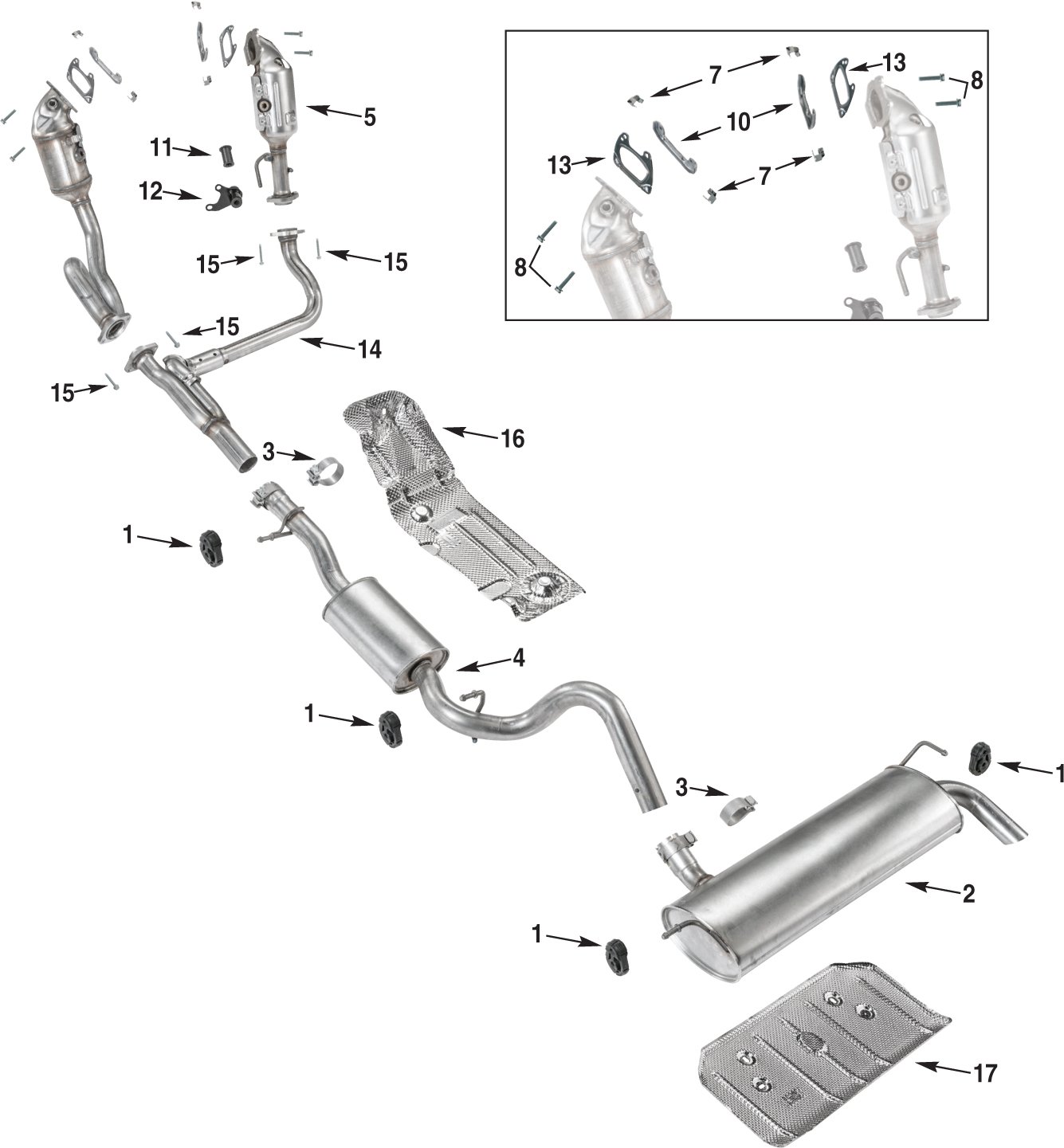
This guide will explore the individual components of a Wrangler exhaust system, discuss common upgrades, and provide practical advice to help you choose the right exhaust parts for your needs and budget.
Key Components of a Jeep Wrangler Exhaust System
Before diving into upgrades, it's important to understand the basic components that make up your Wrangler's exhaust system:
- Exhaust Manifold/Headers: These connect directly to the engine's cylinder head and collect exhaust gases from each cylinder. They are often made of cast iron or stainless steel. Headers are typically used in aftermarket applications for improved flow.
- Catalytic Converter: This component reduces harmful emissions by converting pollutants into less harmful substances. Catalytic converters are mandated by law and must be functioning correctly for your vehicle to pass emissions tests.
- Muffler: The muffler is responsible for dampening the sound of the exhaust. Different muffler designs create different exhaust tones, ranging from quiet and mellow to loud and aggressive.
- Resonator (Optional): Some Wranglers have a resonator, which further reduces exhaust noise and helps fine-tune the exhaust note.
- Tailpipe: The tailpipe directs the exhaust gases away from the vehicle.
- Exhaust Tips: These are the visible ends of the exhaust system and are primarily for aesthetic purposes. They come in various shapes, sizes, and finishes.
- Exhaust Pipes: Connect all the components together, directing exhaust gases through the system.


Upgrading Your Wrangler's Exhaust System: Options and Considerations
When it comes to upgrading your Wrangler's exhaust system, you have several options:
- Cat-Back Systems: These systems replace everything from the catalytic converter back to the tailpipe. They are a popular choice because they offer a balance of performance, sound, and ease of installation.
- Axle-Back Systems: These systems replace only the muffler and tailpipe. They are a more affordable option and are primarily focused on improving the sound of your Wrangler.
- Headers: Replacing the exhaust manifold with aftermarket headers can significantly improve exhaust flow and increase horsepower. However, installation can be more complex.
- High-Flow Catalytic Converters: These converters offer less restriction than stock converters, improving exhaust flow while still meeting emissions requirements.
- Performance Mufflers: Upgrading to a performance muffler is a simple way to change the sound of your Wrangler.
Important Considerations When Choosing Exhaust Parts:
- Emissions Compliance: Ensure that any exhaust modifications you make comply with local and state emissions regulations. Removing or altering the catalytic converter is illegal in many jurisdictions.
- Sound Level: Consider the sound level of the exhaust system. Some systems are very loud and may not be suitable for daily driving or residential areas.
- Material: Exhaust systems are typically made of aluminized steel or stainless steel. Stainless steel is more durable and resistant to corrosion, but it is also more expensive.
- Installation: Consider your mechanical skills and the complexity of the installation process. Some systems are relatively easy to install, while others may require professional installation.
- Price: Exhaust systems can range in price from a few hundred dollars to several thousand dollars. Set a budget and research different options within that range.
- Engine Type: Different Jeep Wrangler engine types require different exhaust systems. Make sure the exhaust system you choose is compatible with your Wrangler's engine (e.g., 3.6L V6, 2.0L Turbo, etc.).
- Model Year: Similarly, exhaust systems vary based on your Wrangler's model year (e.g., TJ, JK, JL). Ensure compatibility before purchasing.
How-To: Installing a Cat-Back Exhaust System (General Guide)
- Disclaimer: This is a general guide, and specific instructions may vary depending on the exhaust system and your Wrangler model. Always refer to the manufacturer's instructions. Professional installation is recommended if you are not comfortable with automotive repairs.
- Gather Tools and Materials: You'll need sockets, wrenches, a ratchet, penetrating oil, a jack and jack stands, safety glasses, and gloves.
- Prepare the Vehicle: Park your Wrangler on a level surface, engage the parking brake, and disconnect the negative battery cable.
- Raise and Secure the Vehicle: Use a jack to raise the vehicle and securely support it with jack stands.
- Loosen and Remove the Old Exhaust System: Spray penetrating oil on the exhaust hangers and bolts to loosen them. Carefully remove the old exhaust system, starting with the tailpipe and working your way forward.
- Install the New Exhaust System: Follow the manufacturer's instructions to install the new exhaust system. Typically, you'll start by attaching the new exhaust pipes to the catalytic converter and then working your way back to the tailpipe.
- Tighten All Connections: Ensure all bolts and clamps are properly tightened.
- Lower the Vehicle: Carefully lower the vehicle back to the ground.
- Reconnect the Battery: Reconnect the negative battery cable.
- Start the Engine and Check for Leaks: Start the engine and listen for any exhaust leaks. If you hear any leaks, tighten the connections until they are sealed.
Potential Challenges and Solutions
- Rusty Bolts: Rusty bolts can be a major challenge when removing the old exhaust system. Use penetrating oil liberally and allow it to soak for several hours before attempting to remove the bolts. If necessary, use a bolt extractor or heat to loosen stubborn bolts.
- Exhaust Leaks: Exhaust leaks can occur if the connections are not properly sealed. Double-check all connections and tighten them as needed. You may also need to use exhaust sealant to ensure a leak-free seal.
- Fitment Issues: In rare cases, the new exhaust system may not fit perfectly. Contact the manufacturer or vendor for assistance. You may need to make minor adjustments to the exhaust system to ensure a proper fit.
Tips for Maintaining Your Wrangler's Exhaust System
- Regular Inspections: Inspect your exhaust system regularly for signs of rust, damage, or leaks.
- Address Issues Promptly: Address any issues as soon as possible to prevent further damage.
- Avoid Driving Through Deep Water: Driving through deep water can damage the exhaust system and cause it to rust prematurely.
- Use Quality Parts: When replacing exhaust parts, use high-quality parts that are designed for your Wrangler.
Table Price of Jeep Wrangler Exhaust Parts
| Part | Description | Material | Estimated Price Range |
|---|---|---|---|
| Cat-Back Exhaust System | Replaces everything from the cat. converter back | Aluminized Steel | $300 - $800 |
| Cat-Back Exhaust System | Replaces everything from the cat. converter back | Stainless Steel | $500 - $1500 |
| Axle-Back Exhaust System | Replaces the muffler and tailpipe | Aluminized Steel | $150 - $400 |
| Axle-Back Exhaust System | Replaces the muffler and tailpipe | Stainless Steel | $300 - $800 |
| Performance Muffler | Replaces the stock muffler | Aluminized Steel | $80 - $200 |
| Performance Muffler | Replaces the stock muffler | Stainless Steel | $150 - $400 |
| Headers (Long Tube) | Replaces exhaust manifolds | Stainless Steel | $400 - $1200 |
| High-Flow Catalytic Converter | Replaces the stock catalytic converter | Stainless Steel | $200 - $600 |
| Exhaust Tip (Single) | Adds aesthetic appeal | Stainless Steel | $30 - $100 |
| Exhaust Tip (Dual) | Adds aesthetic appeal | Stainless Steel | $60 - $200 |
| Exhaust Hanger Kit | Replacement hangers | Steel/Rubber | $10 - $30 |
| Exhaust Clamps | Used to connect exhaust pipes | Steel | $5 - $15 per clamp |
Note: Prices are estimates and can vary depending on the brand, retailer, and specific features of the part.
Frequently Asked Questions (FAQ)
-
Q: Will an aftermarket exhaust void my warranty?
- A: Generally, installing an aftermarket exhaust system will not automatically void your entire warranty. However, if the exhaust system causes damage to other components of your vehicle, the manufacturer may deny warranty coverage for those specific parts.
-
Q: How do I choose the right exhaust system for my Wrangler?
- A: Consider your budget, desired sound level, performance goals, and local emissions regulations. Research different systems and read reviews before making a decision.
-
Q: Can I install an exhaust system myself?
- A: Yes, if you have mechanical experience and the necessary tools. However, professional installation is recommended if you are not comfortable with automotive repairs.
-
Q: What is the difference between a cat-back and an axle-back exhaust system?
- A: A cat-back system replaces everything from the catalytic converter back to the tailpipe, while an axle-back system only replaces the muffler and tailpipe.
-
Q: Will a new exhaust system improve my gas mileage?
- A: While some exhaust systems may offer slight improvements in fuel economy, it is not always guaranteed. The primary benefits of upgrading your exhaust system are improved performance and enhanced sound.
-
Q: My exhaust is making a rattling noise. What could be the problem?
- A: A rattling noise could be caused by a loose exhaust hanger, a damaged muffler, or a broken catalytic converter. Inspect the exhaust system carefully to identify the source of the noise.
-
Q: What is the lifespan of an exhaust system?
- A: The lifespan of an exhaust system can vary depending on the material, driving conditions, and climate. Stainless steel systems typically last longer than aluminized steel systems.
Conclusion: Fine-Tuning Your Wrangler's Soul
Upgrading your Jeep Wrangler's exhaust system is more than just bolting on new parts; it's about fine-tuning the soul of your machine. By understanding the different components, considering your needs, and making informed decisions, you can transform your Wrangler's performance, sound, and overall driving experience. Whether you're seeking a subtle rumble or an aggressive roar, the right exhaust system can help you unlock the full potential of your iconic off-roader. So, do your research, choose wisely, and get ready to unleash your Wrangler's true voice.
0 comments