Introduction: Preserving a Classic Piece of American Off-Road History
The 1978 Jeep CJ7 occupies a special place in the hearts of off-road enthusiasts and classic car collectors alike. It represents a golden era of Jeep design, blending rugged capability with a distinct, iconic aesthetic. However, owning a vehicle of this vintage requires dedication, particularly when it comes to sourcing and maintaining its parts. This comprehensive guide will navigate the world of 1978 Jeep CJ7 parts, covering everything from common replacements to restoration essentials, offering practical advice to keep your CJ7 running strong and looking its best.
1978 Jeep CJ7 Parts: A Comprehensive Guide to Restoration and Maintenance
Section 1: Understanding the 1978 Jeep CJ7 and its Unique Characteristics
Before diving into parts specifics, it's crucial to understand the unique characteristics of the 1978 CJ7. This model year falls within the CJ7's production run (1976-1986), and while many parts are interchangeable within that range, there are some key differences. The 1978 model year offered several engine options, including the AMC 258 inline-six, the AMC 304 V8, and, in some cases, the 151 cubic inch "Iron Duke" inline-four. Transmissions varied, typically including a T-150 three-speed manual or a Turbo Hydra-Matic 400 automatic. Transfer cases were typically the Dana 20. Axles were usually Dana 30 front and AMC 20 rear. Knowing the specific configuration of your CJ7 is paramount when searching for replacement parts. Always verify the engine code, transmission type, and axle identification to ensure compatibility.
Section 2: Essential Replacement Parts for the 1978 CJ7
As with any vehicle of this age, certain parts are more prone to wear and tear. These are the "essential replacements" that you'll likely encounter during ownership:
- Brake Components: Brake pads, rotors (or drums), calipers, wheel cylinders, master cylinder, brake lines, and hoses. These are critical for safety and should be inspected and replaced regularly.
- Suspension Components: Shocks, leaf springs, bushings, shackles, and steering components (tie rod ends, ball joints, steering gear). A worn suspension affects handling, ride quality, and safety.
- Engine Components: Spark plugs, wires, distributor cap and rotor, air filter, fuel filter, oil filter, and belts and hoses. Regular maintenance is key to engine longevity.
- Cooling System Components: Radiator, water pump, thermostat, and coolant hoses. Overheating is a common issue in older vehicles, so maintaining the cooling system is crucial.
- Electrical Components: Battery, alternator, starter, wiring harnesses, lights, and switches. Corrosion and age can degrade electrical components, leading to malfunctions.
- Fuel System Components: Fuel pump, carburetor (or fuel injection components, if applicable), fuel lines, and fuel tank. Fuel system issues can cause poor performance and starting problems.

Section 3: Locating 1978 CJ7 Parts: A Buyer's Guide
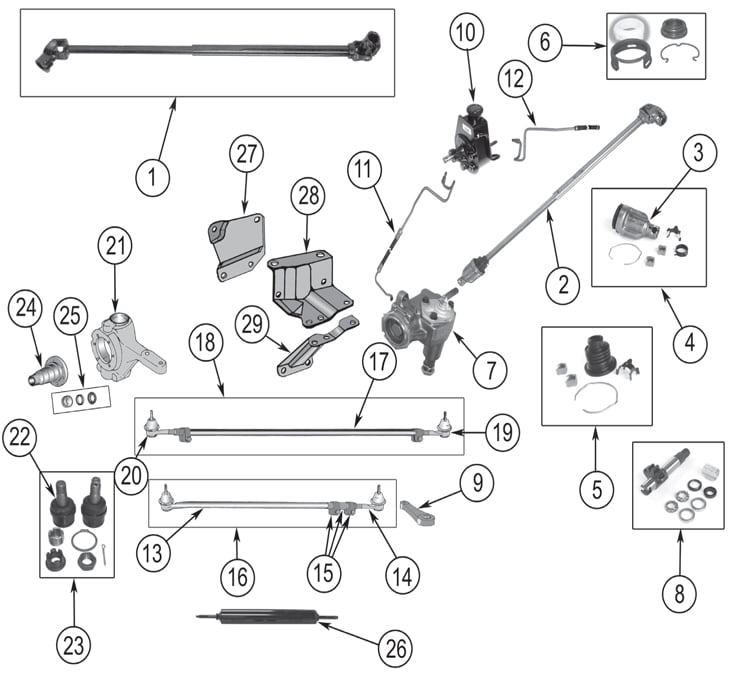
Finding the right parts for your 1978 CJ7 requires a strategic approach. Here are several avenues to explore:
- Online Retailers: Websites specializing in Jeep parts, such as Quadratec, Morris 4x4 Center, and Summit Racing, offer a wide selection of new and aftermarket parts.
- Local Auto Parts Stores: While they may not stock everything specific to a 1978 CJ7, local stores can often source common replacement parts and offer helpful advice.
- Jeep Forums and Online Communities: Online forums dedicated to Jeeps are invaluable resources for finding used parts, connecting with other owners, and getting technical advice. Websites like JeepForum.com are excellent resources.
- Salvage Yards: Salvage yards specializing in classic vehicles can be a goldmine for finding original or hard-to-find parts. Be prepared to do some digging and potentially remove the parts yourself.
- eBay and Online Auction Sites: eBay can be a good source for both new and used parts, but exercise caution and carefully inspect the seller's feedback and the part's description before bidding.
- Specialty Jeep Restoration Shops: These shops often carry a selection of parts specifically for CJ7 restoration projects. They can also provide expert advice and installation services.

Section 4: Restoration Parts: Bringing Your CJ7 Back to its Former Glory
Restoring a 1978 CJ7 involves more than just replacing worn-out parts. It's about returning the vehicle to its original condition. This often requires sourcing specific restoration parts:
- Body Panels: Fenders, quarter panels, floor pans, and rocker panels. Rust is a common issue in older Jeeps, so body panel replacement may be necessary.
- Interior Components: Seat covers, carpets, dashboards, gauges, and trim pieces. Restoring the interior can significantly enhance the vehicle's appearance and comfort.
- Exterior Trim: Bumpers, grilles, emblems, and mirrors. These details contribute to the CJ7's classic look.
- Original Decals and Badges: Sourcing accurate reproductions of the original decals and badges is essential for a true restoration.
Section 5: Performance Upgrades: Enhancing Your CJ7's Capabilities
While maintaining originality is important for some, others may want to enhance their CJ7's performance. Common upgrades include:
- Engine Swaps: Replacing the original engine with a more powerful one, such as a modern fuel-injected V8.
- Suspension Lifts: Installing a lift kit to increase ground clearance and accommodate larger tires.
- Axle Upgrades: Replacing the original axles with stronger ones, such as Dana 44s or Dana 60s.
- Brake Upgrades: Installing larger brakes or disc brake conversions for improved stopping power.
- Fuel Injection Conversions: Converting from a carburetor to fuel injection for improved fuel economy and performance.
Section 6: Important Considerations When Buying CJ7 Parts
- Compatibility: Always verify that the part is compatible with your specific 1978 CJ7 configuration (engine, transmission, axles, etc.).
- Quality: Choose reputable brands and suppliers to ensure that you're getting high-quality parts that will last.
- Condition: If buying used parts, carefully inspect them for damage or wear.
- Price: Compare prices from different sources to ensure that you're getting a fair deal.
- Warranty: Check if the part comes with a warranty.
- Returns: Make sure the seller has a reasonable return policy in case the part is defective or doesn't fit.
Section 7: Tips for Maintaining Your 1978 CJ7
- Regular Maintenance: Follow the manufacturer's recommended maintenance schedule.
- Inspect Regularly: Periodically inspect your CJ7 for signs of wear or damage.
- Keep it Clean: Wash and wax your CJ7 regularly to protect the paint and prevent rust.
- Store it Properly: If you're not driving your CJ7 regularly, store it in a dry, covered location.
- Join a Jeep Club: Connecting with other Jeep owners can provide valuable support and advice.
Section 8: Potential Challenges and Solutions
- Finding Obsolete Parts: Some parts for the 1978 CJ7 may be difficult to find. Consider using aftermarket parts or searching salvage yards.
- Rust: Rust is a common problem in older Jeeps. Address rust issues promptly to prevent further damage.
- Electrical Problems: Electrical problems can be challenging to diagnose. Consult a qualified mechanic if you're not comfortable working on electrical systems.
- Mechanical Issues: Complex mechanical repairs may require the expertise of a skilled mechanic.
Price Table for 1978 Jeep CJ7 Parts
| Part Description | Estimated Price Range | Notes |
|---|---|---|
| Brake Pads (Front) | $20 - $50 | Price varies by brand and material. |
| Brake Rotors (Front) | $40 - $80 each | Solid rotors were standard. |
| Brake Shoes (Rear) | $25 - $60 | Price varies by brand and material. |
| Brake Drums (Rear) | $50 - $100 each | |
| Master Cylinder | $50 - $150 | Depends on whether it's a single or dual bowl. |
| Shocks (Each) | $30 - $100 | Price varies by type (gas, hydraulic). |
| Leaf Springs (Front/Rear) | $150 - $400 each | Price varies by brand and lift height. |
| Ball Joints (Upper/Lower) | $20 - $60 each | |
| Tie Rod Ends (Each) | $15 - $40 each | |
| Water Pump | $40 - $100 | |
| Radiator | $150 - $400 | Price varies by core material and size. |
| Starter Motor | $50 - $150 | |
| Alternator | $75 - $200 | |
| Fuel Pump | $30 - $80 | Mechanical fuel pump for most engines. |
| Carburetor (Rebuilt) | $150 - $400 | Price depends on the carburetor type (e.g., Carter BBD). |
| Distributor Cap & Rotor Kit | $20 - $50 | |
| Seat Covers (Pair) | $100 - $300 | Price varies by material (vinyl, cloth). |
| Floor Pans (Pair) | $100 - $300 | Price depends on the gauge of steel. |
| Fenders (Each) | $150 - $400 | Aftermarket or original style. |
| Grill | $100 - $300 | Aftermarket or original style. |
Disclaimer: These prices are estimates and can vary depending on the vendor, brand, part condition (new, used, rebuilt), and location. It's always best to compare prices from multiple sources before making a purchase.
Conclusion: The Enduring Appeal of the 1978 Jeep CJ7
Owning a 1978 Jeep CJ7 is a rewarding experience that connects you to a rich automotive heritage. While sourcing and maintaining parts requires effort, the satisfaction of keeping this classic vehicle on the road is well worth it. By understanding the CJ7's unique characteristics, knowing where to find parts, and performing regular maintenance, you can ensure that your 1978 CJ7 continues to turn heads and conquer trails for years to come. Remember to always prioritize safety, choose quality parts, and seek expert advice when needed. With a little dedication, your 1978 CJ7 will remain a cherished piece of American automotive history.
Frequently Asked Questions (FAQ)
-
Q: Where can I find the VIN on my 1978 CJ7?
- A: The VIN is typically located on the driver's side dashboard near the windshield and on the vehicle's title.
-
Q: What is the best engine to swap into a 1978 CJ7?
- A: There is no "best" engine, as it depends on your needs and budget. Popular options include the Chevy 350 V8, the LS series engines, and the AMC 4.0L inline-six.
-
Q: How can I identify the axles in my 1978 CJ7?
- A: The front axle is typically a Dana 30, and the rear is usually an AMC 20. You can identify them by looking for the manufacturer's markings on the axle housings.
-
Q: What is the stock tire size for a 1978 CJ7?
- A: The stock tire size was typically around 30x9.5R15.
-
Q: How do I troubleshoot electrical problems in my 1978 CJ7?
- A: Start by checking the battery, fuses, and wiring connections. A multimeter can be helpful for testing circuits. If you're not comfortable working on electrical systems, consult a qualified mechanic.
-
Q: Can I convert my 1978 CJ7 to fuel injection?
- A: Yes, fuel injection conversion kits are available for the AMC engines. This can improve fuel economy and performance.
-
Q: What are some common rust areas on a 1978 CJ7?
- A: Common rust areas include the floor pans, rocker panels, fenders, and tailgate.
-
Q: How can I improve the ride quality of my 1978 CJ7?
- A: Replacing worn-out shocks and leaf springs can significantly improve ride quality. Consider upgrading to softer springs or adding aftermarket suspension components.
-
Q: Are there any common problems specific to the 1978 CJ7?
- A: Yes, some common problems include rust, electrical issues, and carburetor problems. The AMC 20 rear axle is also known to be weaker than other axles.
0 comments