The 1995 Jeep Wrangler, often referred to as the YJ model, holds a special place in off-roading history. Its boxy design, durable construction, and go-anywhere capability have cemented its status as a true icon. But after nearly three decades of trails, mud, and sun, even the toughest Wranglers can show their age. This is where understanding and sourcing the right 1995 Jeep Wrangler body parts becomes crucial. Whether you're embarking on a full restoration, repairing damage from an adventure, or simply aiming to personalize your ride, this comprehensive guide will equip you with the knowledge you need to navigate the world of 1995 YJ body parts.
Why Focus on Body Parts? The Importance of Aesthetics and Functionality
Restoring a Legend: A Comprehensive Guide to 1995 Jeep Wrangler Body Parts
The body of your 1995 Jeep Wrangler isn't just about looks. It's the first line of defense against the elements, protecting the mechanical components and passengers inside. Rust, dents, and damage not only detract from the vehicle's appearance but can also compromise its structural integrity and safety. Replacing or repairing damaged body panels, fenders, and other components is essential for:
- Preserving Value: A well-maintained YJ is a highly sought-after classic. Restoring the body can significantly increase its resale value.
- Ensuring Safety: Rusted or damaged body panels can weaken the vehicle's structure, making it less safe in the event of an accident.
- Enhancing Performance: Addressing rust and damage can improve aerodynamics and prevent further deterioration.
- Achieving a Desired Look: Whether you're going for a factory-fresh restoration or a custom build, the body is the foundation of your Wrangler's aesthetic.
Section 1: Identifying and Assessing Your Needs
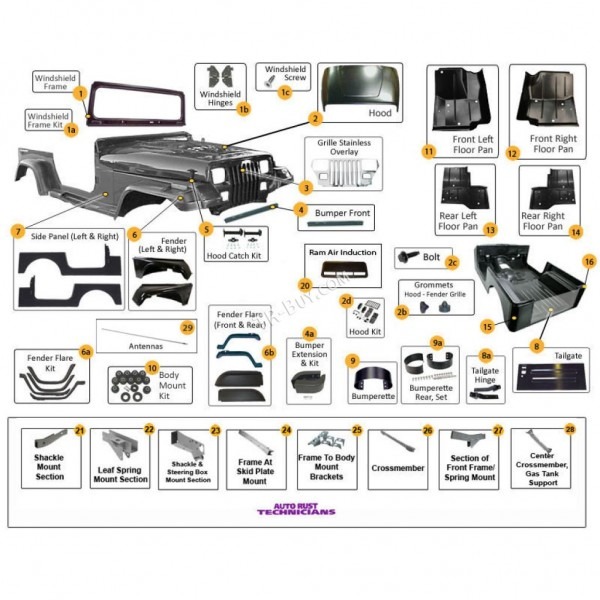
Before diving into the world of replacement body parts, it's vital to accurately assess the condition of your 1995 YJ. This involves a thorough inspection to identify all areas of damage or wear. Here's a step-by-step guide:
-
Visual Inspection: Carefully examine every body panel, including the fenders, hood, doors, tub (body), and tailgate. Look for:
- Rust: Pay close attention to areas prone to rust, such as wheel wells, rocker panels, floor pans, and around body seams.
- Dents and Scratches: Note the size and location of any dents or scratches.
- Cracks and Tears: Check for cracks in fiberglass or plastic components, and tears in soft tops.
- Misalignment: Look for any body panels that are not properly aligned, which could indicate underlying damage.


-
Rust Penetration Test: Use a screwdriver or awl to gently probe areas where rust is suspected. If the tool easily penetrates the metal, it indicates significant rust damage that requires repair or replacement.
-
Frame Inspection: While focusing on the body, don't neglect the frame. Check for rust, cracks, and bends, as frame damage can affect body alignment and overall structural integrity.
-
Document Everything: Take photos and make detailed notes of all damage. This will be helpful when sourcing parts and planning your restoration or repair project.
Section 2: Common 1995 Jeep Wrangler Body Parts and Their Replacements
The 1995 Jeep Wrangler shares many body components with other YJ models (1987-1995), making it relatively easier to find replacement parts compared to some other classic vehicles. Here's a breakdown of common body parts and their typical replacement needs:
- Fenders: Front and rear fenders are susceptible to damage from rocks, trees, and accidents. Replacements are available in steel and fiberglass. Steel fenders offer greater durability, while fiberglass fenders are lighter and more resistant to rust.
- Hood: The hood can be damaged in accidents or from corrosion. Aftermarket hoods are available in various styles, including those with scoops or vents for improved engine cooling.
- Doors: YJs came with full steel doors, half doors, and no doors (open-air driving). Replacement doors can be sourced from salvage yards or aftermarket suppliers. Ensure compatibility with your existing hinges and latches.
- Tub (Body): The tub is the main body structure and can suffer from rust, especially in the floor pans and rocker panels. Replacing the tub is a major undertaking, but it can be necessary for severely rusted Wranglers. Aftermarket tubs are available in steel and fiberglass.
- Tailgate: The tailgate is prone to damage from impacts and rust. Replacements are readily available, and some aftermarket tailgates offer improved features, such as reinforced hinges.
- Windshield Frame: The windshield frame can rust, particularly at the base. Replacement frames are available, but professional installation is recommended.
- Grille: The iconic Jeep grille is a defining feature of the YJ. Replacements are available in various finishes, including chrome, black, and painted.
- Bumpers: Front and rear bumpers provide protection and contribute to the Wrangler's rugged appearance. Aftermarket bumpers offer improved strength and features, such as winch mounts and D-ring attachments.
- Soft Top/Hard Top: The top provides protection from the elements. Replacements are available in various materials and styles.
Section 3: Sourcing 1995 Jeep Wrangler Body Parts
Finding the right body parts for your 1995 YJ requires careful research and consideration. Here are the primary sources:
- Online Retailers: Websites specializing in Jeep parts, such as Quadratec, Morris 4x4 Center, and Summit Racing, offer a wide selection of new and aftermarket body parts.
- Salvage Yards: Local salvage yards can be a great source of used body parts at a lower cost. Be sure to inspect the parts carefully for rust, damage, and compatibility.
- Online Marketplaces: Websites like eBay and Craigslist can connect you with individuals selling used or new-old-stock (NOS) body parts.
- Jeep Forums and Clubs: Online forums and local Jeep clubs are valuable resources for finding parts, advice, and recommendations.
- Local Auto Parts Stores: Some auto parts stores may carry common body parts, such as fenders, hoods, and bumpers.
Tips for Sourcing Parts:
- Compare Prices: Shop around to find the best prices on the parts you need.
- Read Reviews: Check online reviews of different suppliers and parts to ensure quality and reliability.
- Verify Compatibility: Double-check that the parts you are purchasing are compatible with your 1995 Jeep Wrangler.
- Consider Shipping Costs: Factor in shipping costs when comparing prices from different suppliers.
- Ask Questions: Don't hesitate to ask the seller questions about the condition, compatibility, and warranty of the parts.
Section 4: Installation and Repair Considerations
Replacing body parts can range from simple bolt-on replacements to complex welding and fabrication projects. Here are some important considerations:
- Skill Level: Assess your own mechanical skills and experience before tackling a repair. If you're not comfortable with welding, bodywork, or electrical wiring, it's best to hire a professional.
- Tools and Equipment: Ensure you have the necessary tools and equipment for the job, including wrenches, sockets, screwdrivers, a hammer, a sander, a welder (if needed), and safety gear.
- Safety Precautions: Always wear safety glasses, gloves, and a respirator when working with body parts, especially when sanding or welding.
- Rust Prevention: Before installing new body parts, treat any rust on the surrounding areas with a rust converter or inhibitor.
- Proper Fitment: Take your time to ensure that the new body parts fit properly. You may need to make adjustments or modifications to achieve a perfect fit.
- Paint and Finishing: After installing the new body parts, you'll need to paint and finish them to match the rest of the vehicle.
Section 5: Maintaining Your Restored Body
Once you've restored your 1995 Jeep Wrangler's body, it's important to maintain it to prevent future damage and rust. Here are some tips:
- Regular Washing: Wash your Wrangler regularly to remove dirt, salt, and other contaminants.
- Waxing: Apply a coat of wax to protect the paint and prevent rust.
- Rust Prevention: Regularly inspect your Wrangler for rust and treat any affected areas promptly.
- Undercoating: Apply an undercoating to protect the undercarriage from rust and corrosion.
- Garage Storage: Store your Wrangler in a garage or carport to protect it from the elements.
Section 6: Potential Challenges and Solutions
Restoring a 1995 Jeep Wrangler body can present several challenges. Here are some common issues and their solutions:
- Finding Rare Parts: Some body parts, such as specific trim pieces or emblems, can be difficult to find. Be patient and persistent in your search, and consider joining Jeep forums or clubs for assistance.
- Matching Paint Colors: Matching the original paint color can be challenging, especially if the paint has faded over time. Consult with a professional paint shop to get a custom color match.
- Removing Rusted Bolts: Rusted bolts can be difficult to remove. Use a penetrating oil, heat, or a bolt extractor to loosen them.
- Welding Thin Metal: Welding thin sheet metal requires skill and experience. Practice on scrap metal before welding on your Wrangler.
- Cost Overruns: Restoration projects can often exceed the initial budget. Be prepared for unexpected expenses and factor in a contingency fund.
Table Price 1995 Jeep Wrangler Body Parts:
| Part Name | Material | Condition | Price Range (USD) | Source | Notes |
|---|---|---|---|---|---|
| Front Fender (Each) | Steel | New | $150 - $300 | Online Retailers | Aftermarket, may require painting |
| Front Fender (Each) | Used | Good | $75 - $150 | Salvage Yards | Inspect for rust and damage |
| Hood | Steel | New | $250 - $500 | Online Retailers | Aftermarket, may require painting |
| Hood | Used | Good | $150 - $300 | Salvage Yards | Inspect for dents and rust |
| Door (Full Steel) | Steel | New | $400 - $800 | Online Retailers | Aftermarket, may require painting, hardware may be sold separately |
| Door (Full Steel) | Used | Good | $200 - $400 | Salvage Yards | Inspect for rust and damage, check hinge and latch condition |
| Tub (Body) | Steel | New | $1500 - $3000 | Online Retailers | Aftermarket, bare tub, requires significant assembly |
| Tailgate | Steel | New | $200 - $400 | Online Retailers | Aftermarket, may require painting |
| Tailgate | Used | Good | $100 - $200 | Salvage Yards | Inspect for rust and damage, check hinge condition |
| Windshield Frame | Steel | New | $250 - $500 | Online Retailers | Aftermarket, may require painting |
| Grille | Plastic | New | $50 - $150 | Online Retailers | Aftermarket, various finishes available |
| Front Bumper | Steel | New | $100 - $300 | Online Retailers | Aftermarket, various styles available |
| Rear Bumper | Steel | New | $100 - $300 | Online Retailers | Aftermarket, various styles available |
| Soft Top | Canvas | New | $300 - $800 | Online Retailers | Aftermarket, various brands and materials available |
| Hard Top | Fiberglass | Used | $500 - $1500 | Online Marketplaces | Inspect for cracks and damage, check rear window and latch condition |
Frequently Asked Questions (FAQ)
- Q: Are YJ (1987-1995) body parts interchangeable?
- A: Yes, most body parts are interchangeable between YJ models, but there may be slight differences in trim or mounting points. Always verify compatibility before purchasing.
- Q: Is it better to repair or replace rusted body panels?
- A: It depends on the extent of the rust. Minor surface rust can be repaired, but significant rust damage requires replacement.
- Q: Can I paint my Jeep Wrangler myself?
- A: Yes, you can paint your Jeep Wrangler yourself, but it requires proper preparation, equipment, and skill. Consider hiring a professional for a high-quality finish.
- Q: How can I prevent rust on my Jeep Wrangler?
- A: Regular washing, waxing, rust prevention products, and undercoating can help prevent rust.
- Q: Where can I find the original paint code for my 1995 Jeep Wrangler?
- A: The paint code is usually located on a sticker on the driver's side door jamb or in the engine compartment.
Conclusion: Reviving the Spirit of the YJ
Restoring a 1995 Jeep Wrangler is a rewarding experience that allows you to preserve a piece of automotive history. By understanding the importance of body parts, identifying your needs, sourcing quality replacements, and following proper installation and maintenance procedures, you can breathe new life into your YJ and enjoy its legendary capabilities for years to come. Remember to prioritize safety, take your time, and don't hesitate to seek professional help when needed. With dedication and the right approach, you can transform your 1995 Jeep Wrangler into a true head-turner, both on and off the road.

0 comments