The Jeep Wrangler TJ, produced from 1997 to 2006, holds a special place in off-road enthusiasts' hearts. Its classic design, robust construction, and legendary capability make it a favorite for trail adventures, weekend cruises, and daily driving. However, even the most reliable vehicles require maintenance and upgrades over time. This guide provides a comprehensive overview of 1997-2006 Jeep Wrangler (TJ) parts, covering everything from essential maintenance components to performance-enhancing upgrades, helping you keep your TJ running strong and looking its best.
Why Understanding Your TJ Parts is Crucial
Revitalize Your Ride: A Comprehensive Guide to 1997-2006 Jeep Wrangler (TJ) Parts
Understanding the various parts of your TJ is essential for several reasons:
- Proper Maintenance: Knowing what parts need regular inspection and replacement helps prevent costly breakdowns and ensures your TJ remains reliable.
- Informed Repairs: Identifying the specific parts required for a repair allows you to source them efficiently and potentially save money by performing the work yourself.
- Personalized Upgrades: Understanding the available upgrade options empowers you to customize your TJ to suit your individual needs and preferences, whether you're seeking improved off-road performance, enhanced aesthetics, or increased comfort.
- Increased Resale Value: Maintaining your TJ with quality parts and documenting repairs can significantly increase its resale value.
Section 1: Essential Maintenance Parts
Regular maintenance is key to extending the life of your TJ. Here are some essential maintenance parts you should be familiar with:
- Engine Components:
- Oil Filter: Crucial for removing contaminants from the engine oil. Replace with every oil change (typically every 3,000-5,000 miles).
- Air Filter: Prevents dirt and debris from entering the engine. Inspect regularly and replace as needed (usually every 12,000-15,000 miles).
- Spark Plugs: Ignite the air-fuel mixture in the cylinders. Replace according to the manufacturer's recommendations (typically every 30,000 miles).
- Coolant: Prevents overheating and protects against corrosion. Flush and replace every 2-3 years.
- Belts and Hoses: Essential for various engine functions. Inspect regularly for cracks and wear and replace as needed.
- Brake System:
- Brake Pads: Provide friction to stop the vehicle. Replace when they wear down to a certain thickness.
- Brake Rotors: The metal discs that the brake pads clamp onto. Resurface or replace when warped or worn.
- Brake Calipers: House the brake pads and apply pressure to the rotors. Inspect for leaks and proper function.
- Brake Lines: Carry brake fluid to the calipers. Inspect for cracks and leaks.
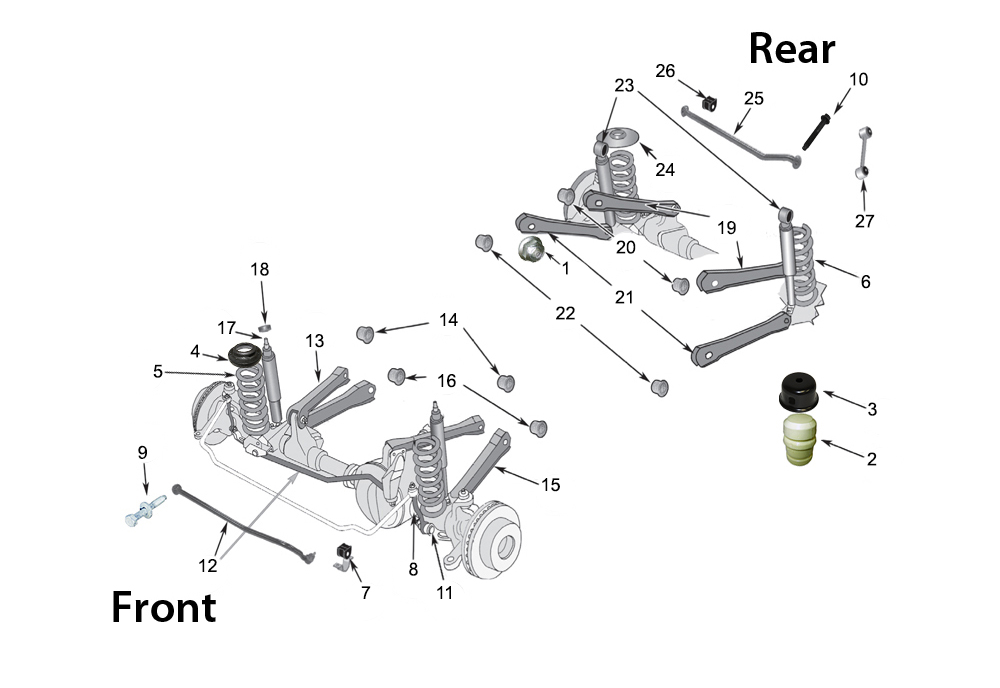
- Suspension and Steering:
- Shocks/Struts: Control suspension movement and improve ride quality. Replace when worn or leaking.
- Ball Joints: Connect the suspension to the steering knuckle. Inspect for wear and replace when loose.
- Tie Rod Ends: Connect the steering linkage to the wheels. Inspect for wear and replace when loose.
- Fluids:
- Engine Oil: Lubricates engine components and dissipates heat.
- Transmission Fluid: Lubricates the transmission gears and helps with shifting.
- Differential Fluid: Lubricates the gears in the front and rear differentials.
- Power Steering Fluid: Assists with steering.
- Brake Fluid: Transmits pressure from the brake pedal to the calipers.
Section 2: Performance Upgrades
For those looking to enhance their TJ's performance, a wide range of upgrade parts are available:
- Engine Performance:
- Cold Air Intake: Improves airflow to the engine, potentially increasing horsepower and torque.
- Performance Exhaust System: Reduces backpressure and improves exhaust flow, potentially increasing horsepower and torque.
- Throttle Body Spacer: Increases airflow velocity into the engine, potentially improving throttle response.
- Performance Chip/Programmer: Optimizes engine parameters for improved performance.
- Suspension and Lift Kits:
- Lift Kits: Increase ground clearance and allow for larger tires. Available in various heights and configurations (e.g., body lift, suspension lift).
- Shocks and Struts: Upgrade to performance shocks and struts for improved handling and ride quality, especially off-road.
- Control Arms: Provide greater articulation and adjustability for lifted vehicles.
- Sway Bar Disconnects: Allow for increased wheel travel off-road.
- Drivetrain:
- Gears: Re-gearing the axles can improve performance with larger tires or in off-road situations.
- Lockers: Provide increased traction in off-road conditions by locking the axles together.
- Axle Shafts: Upgrade to stronger axle shafts for increased durability.
Section 3: Exterior and Interior Upgrades
Customize the look and feel of your TJ with these upgrades:
- Bumpers:
- Aftermarket Bumpers: Provide increased protection, improved approach angles, and mounting points for winches and lights.
- Winches:
- Electric Winches: Essential for self-recovery and assisting other vehicles.
- Lighting:
- LED Headlights: Provide brighter and more efficient lighting.
- Auxiliary Lights: Increase visibility off-road.
- Tops:
- Soft Tops: Offer versatility and open-air driving.
- Hard Tops: Provide increased security and weather protection.
- Interior:
- Seat Covers: Protect the seats and enhance the interior aesthetics.
- Floor Liners: Protect the carpets from dirt and water.
- Stereo System: Upgrade the audio system for improved sound quality.
Section 4: Finding the Right Parts
When sourcing parts for your TJ, consider the following:
- Reputable Suppliers: Choose reputable suppliers that offer quality parts and reliable customer service. Online retailers like Quadratec, Morris 4x4 Center, and Amazon are popular choices.
- OEM vs. Aftermarket: OEM (Original Equipment Manufacturer) parts are made by the vehicle manufacturer and are typically more expensive but guaranteed to fit. Aftermarket parts are made by third-party manufacturers and can offer cost savings or performance improvements.
- Part Numbers: Use the correct part numbers to ensure you are ordering the right parts for your specific TJ model and year.
- Reviews and Ratings: Read reviews and ratings from other customers before making a purchase.
- Warranty: Check the warranty offered by the supplier or manufacturer.
Section 5: Common Problems and Solutions
The TJ is a generally reliable vehicle, but certain issues are common:
- Rust: The TJ is prone to rust, especially in areas with harsh winters. Regular washing, waxing, and rustproofing can help prevent rust.
- Death Wobble: A violent shaking of the front end at highway speeds. This can be caused by worn steering components, unbalanced tires, or loose suspension parts.
- Oil Leaks: Oil leaks are common, especially from the rear main seal and valve cover gaskets.
- Check Engine Light: The check engine light can illuminate for various reasons. Use an OBDII scanner to diagnose the problem.
- Soft Top Issues: Soft tops can wear out and leak over time. Regular cleaning and maintenance can extend their life.
Section 6: Tips for Maintaining Your TJ
- Regular Inspections: Inspect your TJ regularly for any signs of wear or damage.
- Follow the Maintenance Schedule: Adhere to the manufacturer's recommended maintenance schedule.
- Use Quality Fluids: Use high-quality fluids that meet the specifications for your TJ.
- Keep it Clean: Wash and wax your TJ regularly to protect the paint and prevent rust.
- Address Problems Promptly: Don't ignore problems. Address them promptly to prevent them from becoming more serious.
Price Table for Common 1997-2006 Jeep Wrangler (TJ) Parts:
| Part Description | Approximate Price Range | Notes |
|---|---|---|
| Oil Filter | $5 - $15 | Price varies by brand and quality. |
| Air Filter | $10 - $30 | Price varies by brand and filter type (e.g., paper, reusable). |
| Spark Plugs (Set of 6) | $20 - $60 | Price varies by brand and plug type (e.g., copper, platinum, iridium). |
| Front Brake Pads | $30 - $70 | Price per set. |
| Front Brake Rotors (Pair) | $80 - $150 | Price per pair. |
| Shocks (Each) | $30 - $100 | Price varies by brand and type (e.g., gas, hydraulic). |
| Ball Joints (Each) | $20 - $60 | Price per ball joint. |
| Tie Rod Ends (Each) | $20 - $50 | Price per tie rod end. |
| Coolant (Gallon) | $10 - $25 | Price varies by brand and type (e.g., green, HOAT, OAT). |
| Engine Oil (5 Quarts) | $20 - $50 | Price varies by brand and type (e.g., conventional, synthetic blend, synthetic). |
| Soft Top | $300 - $800 | Price varies by brand, material, and features. |
| Hard Top | $1000 - $2500 | Price varies by condition (new, used). |
| Aftermarket Front Bumper | $200 - $800 | Price varies by brand, material, and features. |
| LED Headlights (Pair) | $100 - $300 | Price varies by brand and features. |
| 2" Suspension Lift Kit | $300 - $800 | Price varies by brand and components included. |
| Cold Air Intake | $150 - $300 | Price varies by brand and design. |
| Performance Exhaust System | $300 - $800 | Price varies by brand and material (e.g., stainless steel). |
Note: Prices are approximate and may vary depending on the supplier, location, and specific part. Always check with the supplier for the most up-to-date pricing.
FAQ - Frequently Asked Questions
- Q: Where can I find reliable parts for my TJ?
- A: Reputable online retailers like Quadratec, Morris 4x4 Center, and Amazon are good options. Also, consider local auto parts stores and Jeep specialty shops.
- Q: What is the best type of oil to use in my TJ?
- A: Consult your owner's manual for the recommended oil type and viscosity. Synthetic or synthetic blend oils are generally recommended for better performance and protection.
- Q: How often should I change my oil?
- A: Oil change intervals depend on driving conditions and the type of oil used. Generally, every 3,000-5,000 miles is recommended for conventional oil, and 5,000-7,500 miles for synthetic oil.
- Q: What is the "death wobble" and how can I fix it?
- A: The "death wobble" is a violent shaking of the front end. It's typically caused by worn steering components, unbalanced tires, or loose suspension parts. Diagnosing and addressing the root cause is crucial.
- Q: Can I lift my TJ without any modifications to the drivetrain?
- A: Lifting your TJ can affect the drivetrain angles. Depending on the height of the lift, you may need to install a transfer case drop kit, SYE (Slip Yoke Eliminator), or adjust the pinion angles to prevent vibrations and driveline issues.
Conclusion
The 1997-2006 Jeep Wrangler TJ is a versatile and capable vehicle that can be enjoyed for years to come with proper maintenance and well-chosen upgrades. By understanding the various parts of your TJ, you can ensure it remains reliable, performs optimally, and reflects your personal style. Whether you're tackling challenging trails or simply cruising around town, investing in quality parts and regular maintenance will keep your TJ running strong and ready for adventure. Embrace the Jeep life and enjoy the ride!
0 comments