The Jeep Wrangler TJ, produced from 1997 to 2006, holds a special place in the hearts of off-road enthusiasts. Its classic design, solid axles, and removable doors and top make it a highly desirable platform for customization and adventure. However, years of trail abuse, harsh weather, and the simple passage of time can take a toll on the TJ's body. Whether you're dealing with rust, dents, or simply want to refresh the appearance of your Jeep, understanding the world of Jeep Wrangler TJ body parts is crucial. This comprehensive guide will delve into the various body parts available, their importance, considerations when replacing them, and offer practical advice to help you keep your TJ looking its best.
Why Body Parts Matter for Your TJ:
Revitalizing Your Ride: A Comprehensive Guide to Jeep Wrangler TJ Body Parts
The body of your TJ isn't just about aesthetics; it also provides crucial protection for the vehicle's occupants and internal components. A damaged body can compromise safety, lead to further structural issues, and even decrease the resale value of your Jeep. Properly maintained and, when necessary, replaced body parts ensure:
- Safety: A solid body protects occupants in the event of a collision.
- Structural Integrity: Body panels contribute to the overall rigidity and strength of the Jeep's frame.
- Rust Prevention: Damaged paint and exposed metal are prime targets for rust, which can spread rapidly and compromise the vehicle's structural integrity.
- Aesthetics: A clean, well-maintained body enhances the overall appearance and pride of ownership.
- Value: A Jeep in good condition will command a higher resale price.
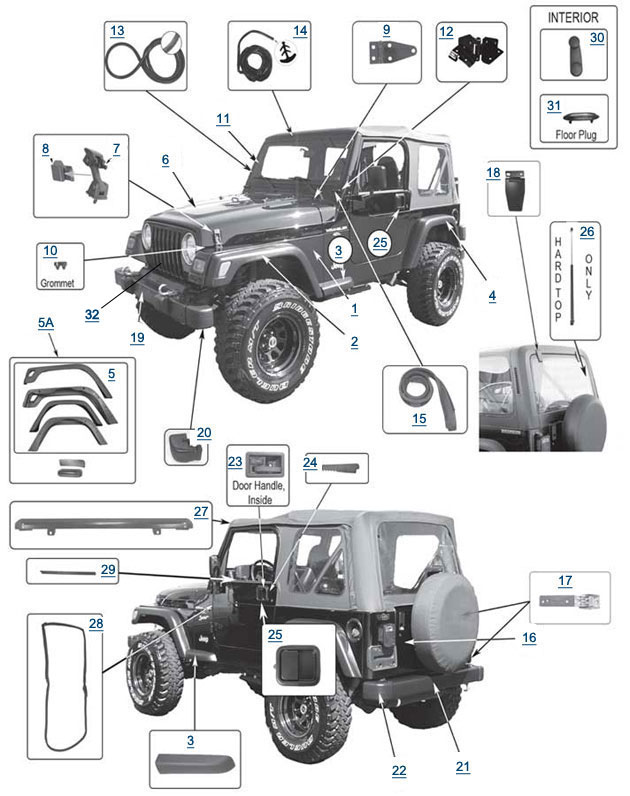
Key Jeep Wrangler TJ Body Parts:
Understanding the various body parts available for your TJ is the first step in any restoration or repair project. Here's a breakdown of some of the most common components:
- Fenders: Front and rear fenders protect the tires and prevent debris from being thrown onto the vehicle or other motorists. They are particularly vulnerable to damage during off-road adventures.
- Hood: The hood covers the engine compartment and provides access for maintenance. Dents, scratches, and rust are common issues.
- Grille: The iconic Jeep grille is a defining feature of the TJ. It protects the radiator and other front-end components.
- Windshield Frame: The windshield frame supports the windshield and provides structural support for the vehicle. Rust is a common problem, especially around the hinges and lower corners.
- Doors: TJ doors are removable, which is a major part of the Jeep experience. However, they can become damaged from off-road use or simply from being removed and reinstalled frequently.
- Rocker Panels: These panels run along the bottom of the vehicle between the front and rear wheels. They are highly susceptible to damage from rocks and other obstacles during off-roading.
- Quarter Panels: These panels form the rear sides of the vehicle and are often damaged in collisions or off-road incidents.
- Tailgate: The tailgate provides access to the rear cargo area. Hinges and latches are common points of failure.
- Floor Pans: The floor pans form the base of the passenger compartment and are prone to rust, especially in areas where water can accumulate.
- Body Tub: The body tub is the main structural component of the Jeep's body. Replacing the entire tub is a significant undertaking, but it may be necessary if the original tub is severely damaged or rusted.


Considerations When Replacing TJ Body Parts:
Before you start replacing body parts on your TJ, there are several factors to consider:
- Material: Body parts are typically made of steel or aluminum. Steel is more durable and affordable, while aluminum is lighter and more resistant to rust.
- Finish: Consider the finish of the replacement part. Bare steel will need to be primed and painted, while some parts come pre-painted or powder-coated.
- Fitment: Ensure that the replacement part is specifically designed for your year and model of TJ. Poor fitment can lead to alignment issues and increased repair costs.
- Quality: Opt for high-quality replacement parts from reputable manufacturers. Cheap parts may not fit properly or last as long.
- Cost: Prices for body parts can vary widely depending on the material, finish, and manufacturer. Set a budget and shop around for the best deals.
- Installation: Depending on the complexity of the repair, you may be able to install the body part yourself or you may need to hire a professional.
Types of Body Parts: OEM vs. Aftermarket:
When sourcing body parts, you'll encounter two main categories:
- OEM (Original Equipment Manufacturer): These are parts made by the original manufacturer (Jeep). They are typically more expensive but offer the best fit and quality.
- Aftermarket: These are parts made by third-party manufacturers. They can be more affordable than OEM parts, and some aftermarket parts offer improved performance or durability. However, quality can vary widely, so it's important to do your research and choose reputable brands.
How-To: Replacing a TJ Fender (Example):
This is a simplified overview. Always consult a repair manual or professional for detailed instructions.
- Preparation: Gather your tools (sockets, wrenches, screwdrivers, pliers, etc.), safety glasses, gloves, and the replacement fender.
- Removal: Disconnect any wiring harnesses attached to the fender (e.g., side marker lights). Remove the bolts holding the fender to the body. You may need to use penetrating oil to loosen rusted bolts.
- Installation: Align the new fender and secure it with the bolts. Tighten the bolts to the manufacturer's specifications. Reconnect any wiring harnesses.
- Finishing Touches: Inspect the fitment and alignment of the fender. You may need to adjust the fender slightly to ensure proper alignment. If the fender is bare steel, prime and paint it to match the rest of the vehicle.
Tips for Maintaining Your TJ's Body:
- Regular Washing: Wash your TJ regularly to remove dirt, salt, and other contaminants that can damage the paint and promote rust.
- Waxing: Waxing your TJ provides a protective layer that helps to prevent rust and protect the paint from fading.
- Touch-Up Paint: Use touch-up paint to repair minor scratches and chips in the paint.
- Rust Prevention: Apply rust-proofing products to vulnerable areas, such as the floor pans, rocker panels, and frame.
- Prompt Repairs: Address any body damage promptly to prevent further deterioration.
Potential Challenges and Solutions:
- Rusted Bolts: Rusted bolts can be difficult to remove. Use penetrating oil and a breaker bar to loosen them. If the bolts are severely rusted, you may need to cut them off and replace them.
- Alignment Issues: New body parts may not always align perfectly. Use shims or body hammers to adjust the alignment.
- Paint Matching: Matching the paint on a new body part to the existing paint on your TJ can be challenging. Take a sample of the original paint to a professional paint shop for color matching.
Jeep Wrangler TJ Body Parts: Price Table
| Body Part | Material | Finish | Approximate Price Range | Notes |
|---|---|---|---|---|
| Front Fender | Steel | Bare | $80 - $200 | Requires priming and painting |
| Front Fender | Steel | Painted | $150 - $350 | Color matching can be tricky |
| Front Fender | Aluminum | Bare | $200 - $400 | Lighter, rust-resistant |
| Hood | Steel | Bare | $150 - $300 | Requires priming and painting |
| Hood | Steel | Primed | $200 - $400 | Ready for paint |
| Grille | Plastic | Black | $50 - $150 | Various styles available |
| Windshield Frame | Steel | Bare | $200 - $400 | Rust-prone area |
| Rocker Panel | Steel | Bare | $50 - $150 | Requires welding |
| Floor Pan (Pair) | Steel | Bare | $100 - $300 | Requires welding |
| Tailgate | Steel | Bare | $200 - $400 | Requires priming and painting |
| Complete Body Tub Kit | Steel | Bare | $2,000 - $5,000 | Major project, often includes floor pans |
| Door (Bare) | Steel | Bare | $300 - $600 | No hardware |
Frequently Asked Questions (FAQ):
- Q: Where can I buy Jeep Wrangler TJ body parts?
- A: You can find body parts at online retailers specializing in Jeep parts, local auto parts stores, and salvage yards.
- Q: How do I know if a body part is compatible with my TJ?
- A: Always check the year and model compatibility before purchasing. Most retailers provide a compatibility chart or tool.
- Q: Can I install body parts myself?
- A: Some body part replacements, such as fenders and grilles, are relatively straightforward and can be done by experienced DIYers. However, more complex repairs, such as replacing floor pans or a body tub, require welding and specialized skills and are best left to professionals.
- Q: How do I prevent rust on my TJ?
- A: Regular washing, waxing, rust-proofing treatments, and prompt repairs of any body damage are essential for preventing rust.
- Q: What is the difference between OEM and aftermarket body parts?
- A: OEM parts are made by the original manufacturer (Jeep) and offer the best fit and quality. Aftermarket parts are made by third-party manufacturers and can be more affordable, but quality can vary.
Conclusion:
Maintaining and restoring the body of your Jeep Wrangler TJ is an investment in its safety, longevity, and overall value. By understanding the various body parts available, considering the factors involved in replacing them, and following proper maintenance practices, you can keep your TJ looking its best and enjoy years of reliable off-road adventures. Whether you're tackling minor repairs or embarking on a full-scale restoration, this guide provides the knowledge and insights you need to revitalize your ride and keep your TJ a head-turner on and off the trail.
0 comments